All The President’s men
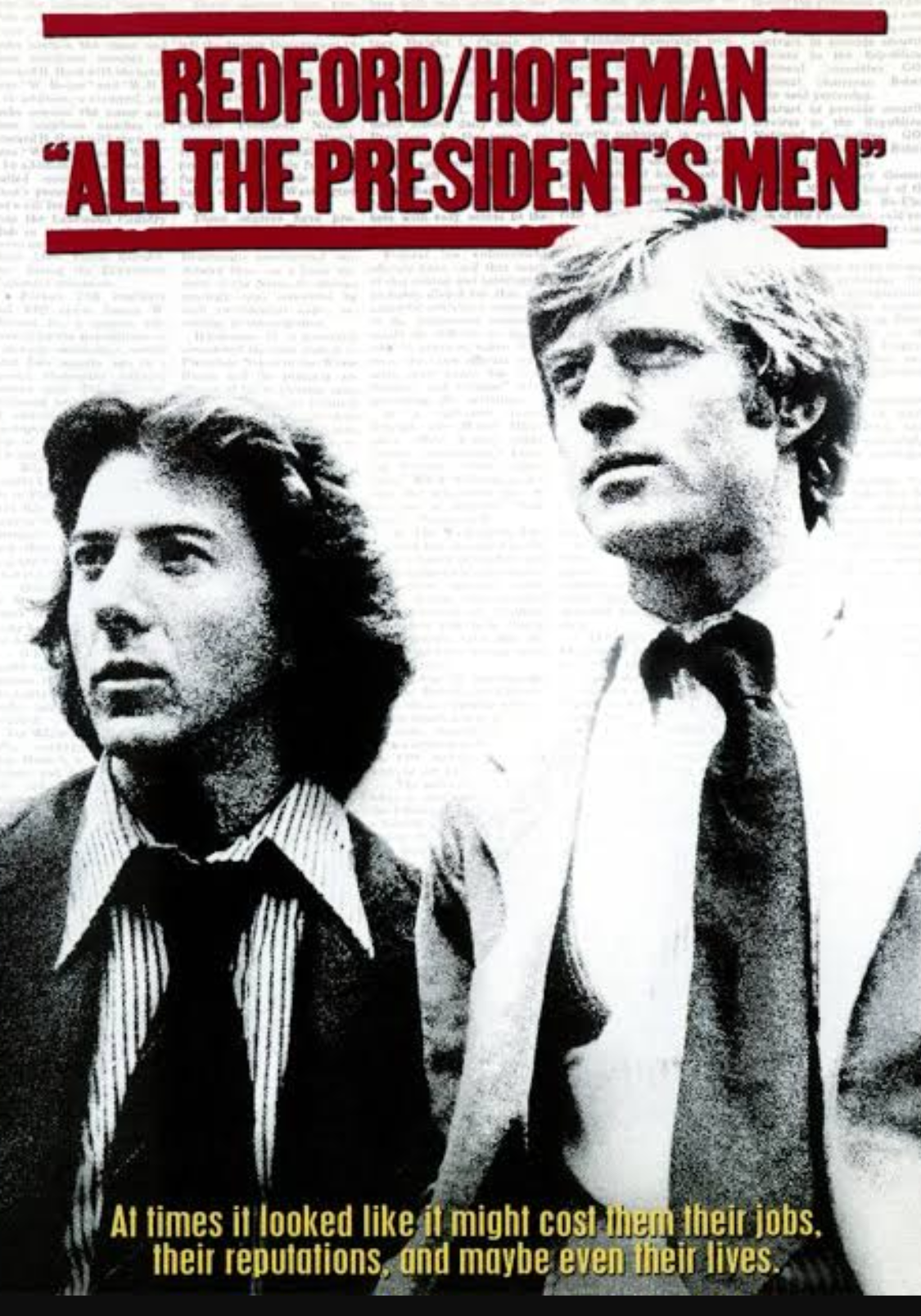
My husband and I went to a local theatre to watch the 50th anniversary of the release of the movie, “All the President’s Men.” (There’s a link between our wedding and this movie but that’s a whole other very funny story.)
In my humble opinion, the movie has stood the test of time. It’s compelling viewing now, just as much as it was back in 1976. If you don’t know, the movie charts the course of what became known as the Watergate Scandal, which eventually toppled the 37th President of the United States, Richard Nixon. (Look up Watergate if you want to know more.)
A few things struck me as I watched the events unfold on the big screen. In no particular order, here they are:
On a purely cinematic experience level, I was heartened by the fact that you don’t need thrilling action-based explosive scenes, spectacular sets and pyrotechnics to make a good movie. (To be clear, I enjoy those too. I’m simply making an observation that you can be on the edge of your seat without them, if you have a good story, a well written script and great acting.) In our attention-deficit world, I am encouraged by this. There is still room for the slow, dialogue and character driven genre in the movie world. Talking of slow, on to my next observation.
I was struck by the power of slow investigative journalism, the kind that carefully checks and rechecks information for veracity. Every time the Washington Post journalists, Bernstein and Woodward made a phone call, and you watched and heard the numbers on an old-time telephone spin around, I was reminded that the very process itself, slowed you down. When they had to sort through hundreds of little cards in a physical library, painstakingly going through each one, it gave them time to sift and sort and process. It forced them to be methodical, circumspect and attentive. Today, in our fast-paced 24 hr news world where the pressure to produce content quickly, the art of slow journalism takes a particular kind of dogged steadfastness, fuelled by scrupulous vigilance. It takes courageous executives who can think beyond the bottom line, spurred by a sense of calling to something bigger than themselves. Some things cannot be hurried, or rather, they can be but at a great cost. I think slow journalism still happens but at minimum, let’s agree that it’s way harder.
My last reflection is how far we have moved the goal posts of moral outrage. The uncovering of wrongdoing that Bernstein and Woodward unearthed led to a president resigning and a number of high-ranking officials going to jail. What bothers me was not that there was corruption or a high-level cover-up – even a cursory look at history will tell you that abuses of power have always existed in governments, organizations and institutions across the ages. No, what causes me consternation is the shifting of our collective and individual responses. Once upon a time, if you did something wrong, you might have put your hand up and had enough embarrassment to step aside yourself or, the people around you and those you led forced you to do so. The English phrase, “It’s a fair cop,” comes to my mind. Once upon time, there was a general consensus and sensibility about what was acceptable and not acceptable in those who seek to lead and carry great responsibility.
That seems to have disappeared.
Today, if a Watergate happened, it would be a mere blip, and we would shrug and move on. “Nothing to see here.” I wonder if we have become so desensitized that we are stuck in a mire of moral complacency. We no longer hold our leaders to a higher standard. We standby, watch and tolerate in the name of pragmatism, all the time turning a blind eye and refusing to demand better. If I am being charitable, I might just wonder if we are simply tired.
A couple of final comments.
It’s a darned good movie that I think has something to say to us today. I recommend you watch it.
It’s a movie that leaves me feeling dejected and hopeful at the same time. It’s often where I live right now.